
Milestone | Etripamil
AOR Pitch | Patient + HCP Launch Strategy
The Ask
Reposition PSVT self-treatment for two audiences with radically different needs and mindsets.
Milestone Pharmaceuticals sought an Agency of Record partner to launch etripamil, the first potential on-demand, self-administered treatment for PSVT in decades. The assignment required a unified brand strategy that could scale across patients and healthcare professionals, while respecting the very different emotional, clinical, and decision-making realities of each audience.
The challenge was not just awareness. It was reframing what “on-demand” care could mean in a category defined by fear, inertia, and crisis-driven treatment.
The Core Problem
PSVT lives in the space between “not life-threatening” and “life-disrupting.”
PSVT is clinically positioned as manageable, yet patients experience it as unpredictable, frightening, and deeply disruptive. Self-treatment options are unreliable. ER visits are traumatic. Ablation is effective but delayed or avoided. The result is a treatment gap the team defined as the “Cavern of Care”: a space between ineffective at-home tactics and invasive medical intervention.
Etripamil needed to clearly and credibly fill that gap as a safe, effective, on-demand option—without overpromising, and without collapsing patient and HCP perspectives into a single message.
My Role: Creative Direction, Strategy Collaboration, Vendor Communication & Collaboration, Creative Team Lead

The Core
Strategy
One brand. Two audiences. Two different definitions of “relief.”
Rather than forcing a unified message, we built a shared strategic foundation with distinct insight-driven expressions for each audience.
Patients needed control, confidence, and normalcy
HCPs needed certainty, simplicity, and protection from escalation
This led to two complementary creative territories that approached the same clinical truth from opposite emotional directions.
THE PATIENT STRATEGY
The Patient
Challenge
PSVT isn’t episodic to patients. It’s endemic.
Through interviews and social listening, patients described PSVT as something that reshapes daily life. Episodes may be intermittent, but the anticipation never is. Travel, work, parenting, and even being alone become sources of anxiety. Existing self-treatment options fail “in the heat of the moment,” leaving patients cycling through ineffective vagal maneuvers, pill-in-a-pocket uncertainty, and ER visits they dread.
Patients didn’t describe wanting a better drug.
They described wanting their lives back.
The Patient
Insight
If PSVT isn’t life-threatening, why does it feel life-ruining?
Patients don’t measure success by conversion rates or minutes to sinus rhythm. They measure it by whether they can leave the house, make plans, or stop bracing for the next episode. The emotional burden far outweighs the clinical framing they’re given.
THE PATIENT SOLUTION
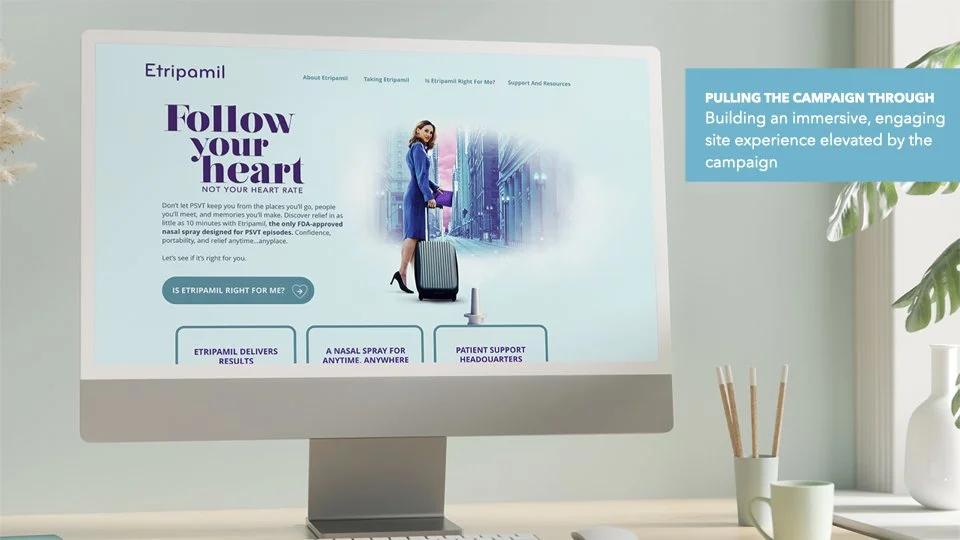
Reclaim Your Rhythm
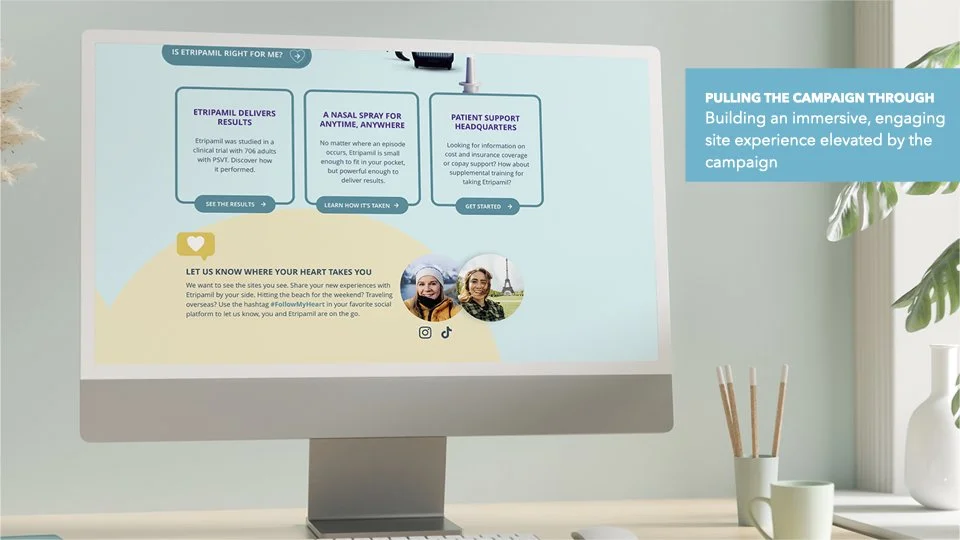
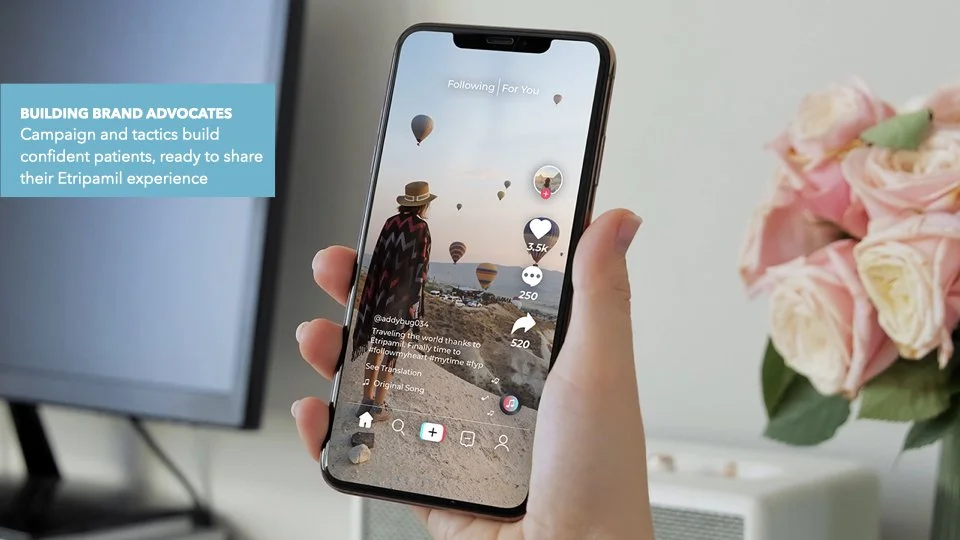
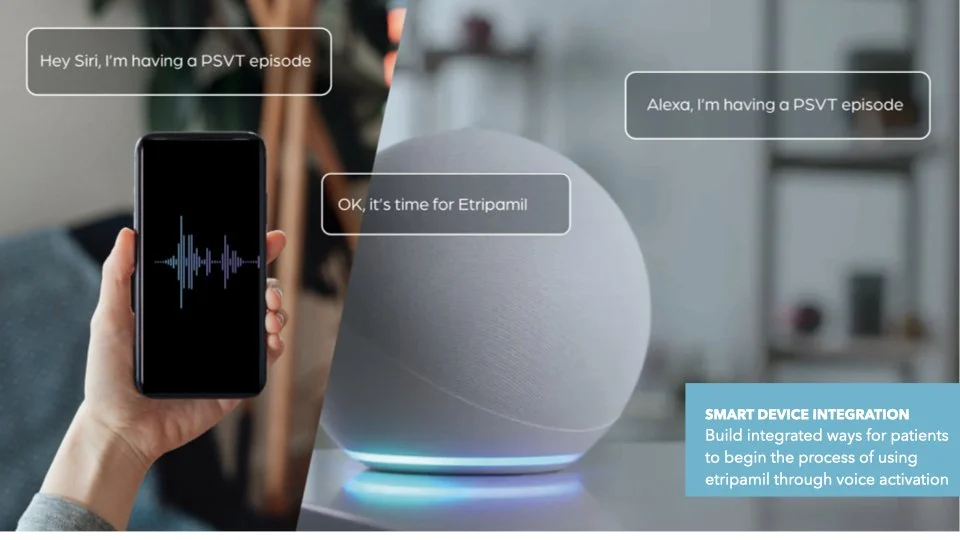
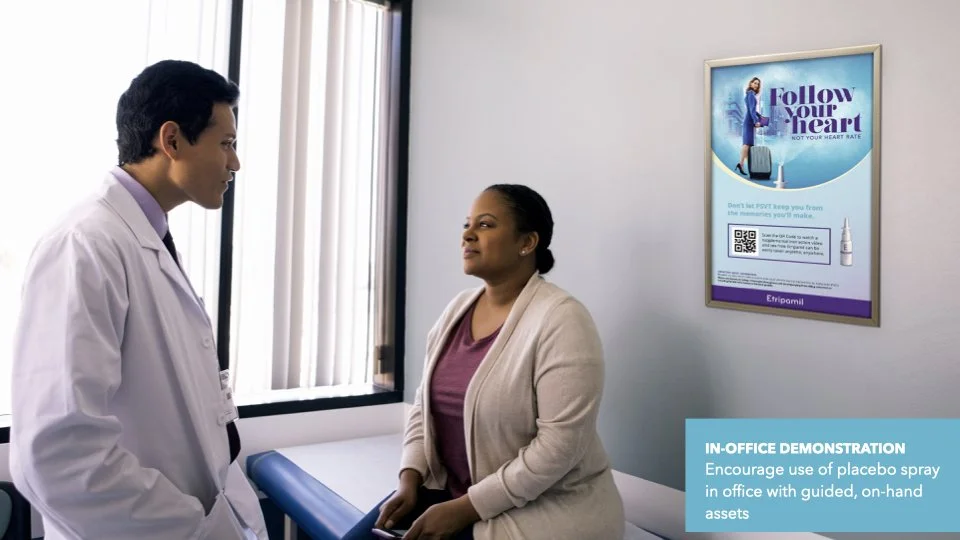
Etripamil was positioned as a way to restore autonomy, not just regulate heart rate. The creative territory focused on addition, not subtraction: what life looks like when PSVT no longer dictates every decision.
Confident, aspirational visuals grounded in real life moments
Language that reframed “on-demand” as freedom, not urgency
A tone that acknowledged fear without amplifying it
Follow your heart. Not your heart rate.
This approach allowed the brand to speak to patients as people first—without minimizing the seriousness of their condition.






THE HCP STRATEGY
The HCP
Challenge
HCPs want to help, but the system pushes them toward crisis care.
Cardiologists, electrophysiologists, and ER physicians approach PSVT from vastly different paradigms. While HCPs recognize the lack of effective self-treatment, many minimize the lived burden because PSVT is rarely fatal. With few innovations in decades, ER referral and ablation become default paths—not because they’re ideal, but because alternatives are limited.
This creates a parallel form of disempowerment:
Patients feel helpless.
HCPs don’t feel helpful.
The HCP
Insight
“If a patient is hospitalized, we’ve already failed.”
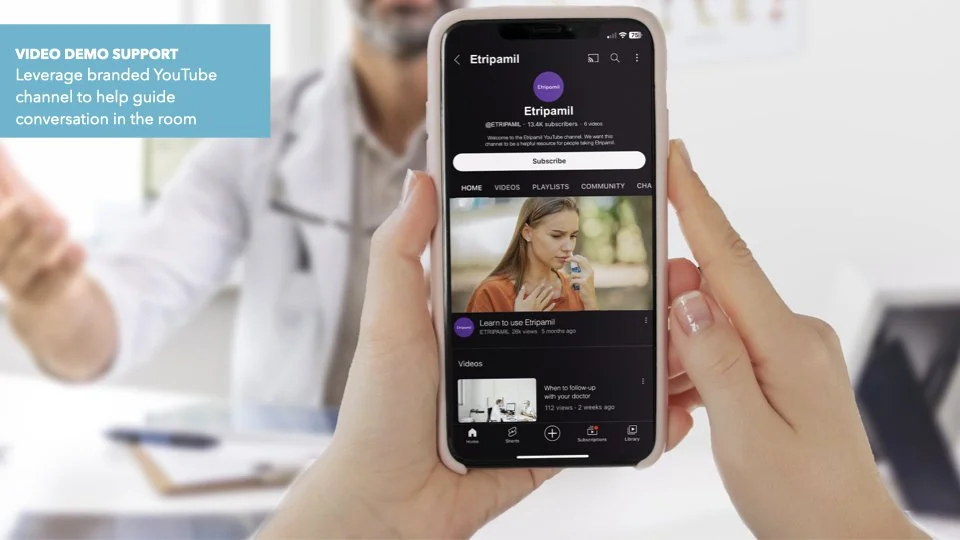
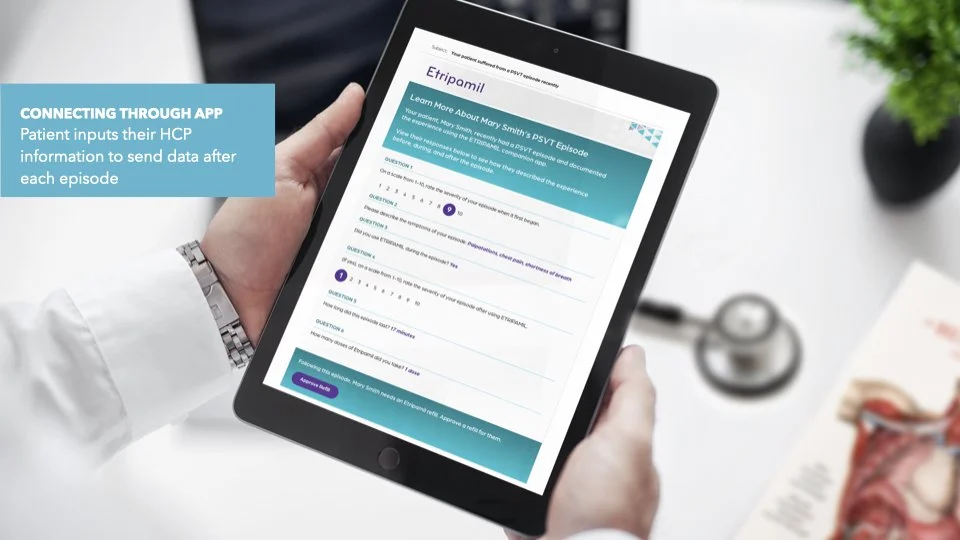
HCPs want to prevent escalation, but they can’t be everywhere. They need tools that work outside the clinic—without introducing complexity, risk, or workflow disruption.
THE HCP SOLUTION
Convert Without Crisis
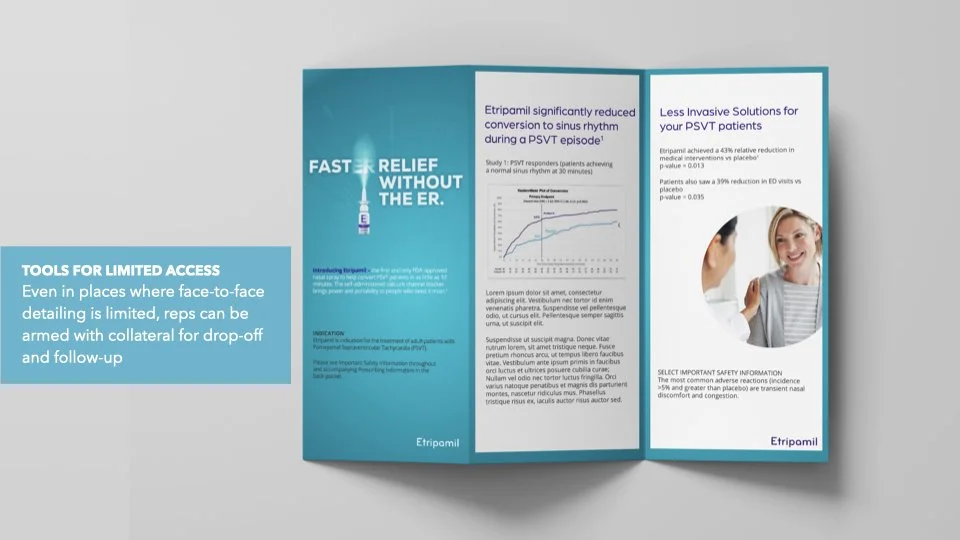
For HCPs, etripamil was positioned as subtraction: fewer ER visits, fewer emergency escalations, fewer moments where control is lost.
Clean, direct visual language emphasizing speed and reliability
Confident brevity tailored to time-constrained professionals
Messaging that reinforced protection, not replacement, of existing care pathways
The promise was simple and clinically grounded:
Fast relief, without defaulting to the ER.



Why This Work Matters
This pitch reframed PSVT treatment by acknowledging a truth the category had ignored: clinical manageability does not equal lived tolerability.
By building distinct but aligned narratives for patients and HCPs, the strategy allowed Etripamil to enter the market as more than a new mechanism of action. It entered as a new way of thinking about episodic care, one that restores confidence on both sides of the prescription.